
Plan a Pacaya volcano hike
Plan a Pacaya walk with a named permitted endpoint, guide, entry and return. Check pace, equipment, weather and what the outing can promise.
Last reviewed October 2026
Contents10
- Plan the Pacaya volcano hike around the allowed walk
- Guide, entry and transport are separate services
- Pacaya volcano hike distance and time need endpoints
- Terrain, pace and an earlier turnaround
- Pack for the walk and the wait
- Weather and light change the plan
- What you might see, and what is not promised
- Is the hike worth the day in your trip plan?
- Questions to settle before you leave
- Verdict: choose a Pacaya volcano hike with clear boundaries
A Pacaya volcano hike needs a confirmed visitor route, a guide plan and a return plan. Do not book on the promise of a summit or flowing lava. Decide what walk is offered, what happens if access changes and whether the pace fits your group. The volcano's height is not the height you will climb.
In brief: choose a named route that your whole group can manage. Confirm who leads the walk and what entry costs remain. Set the return before adding food or another stop, and leave room for the guide to change the plan.
Plan the Pacaya volcano hike around the allowed walk
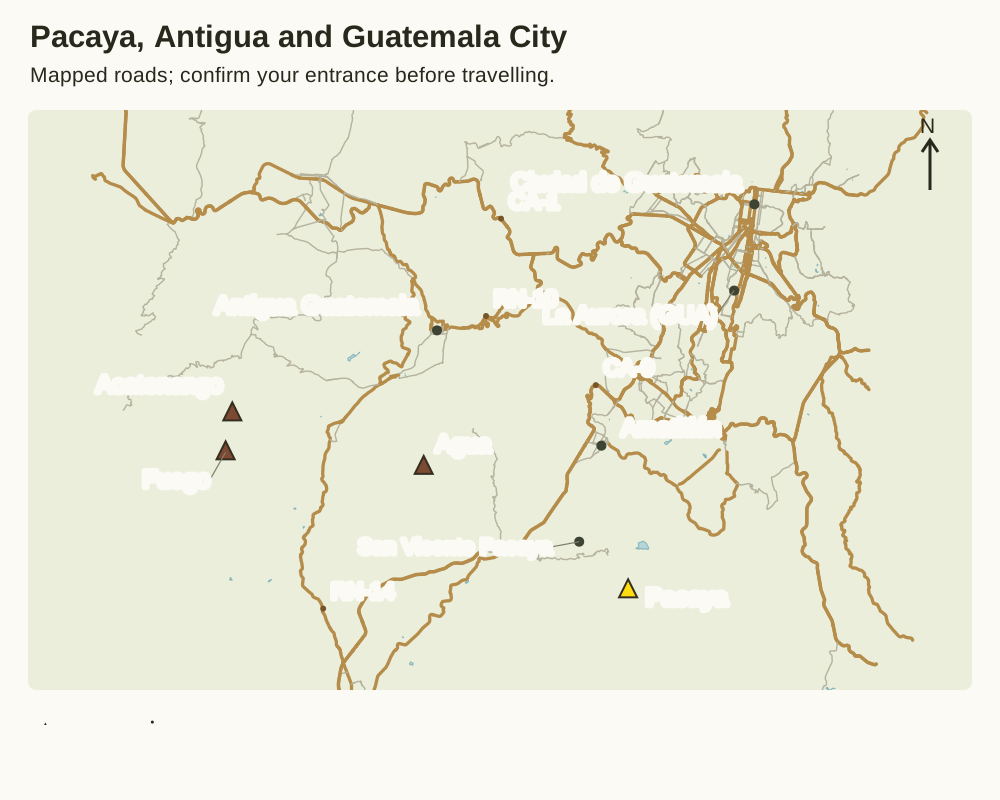
Pacaya is an active volcanic complex in southern Guatemala. The Smithsonian Global Volcanism Program describes its geology and eruption record. That record helps explain the place. It does not set a visitor route or grant access to a crater. A point on a science map is not a trail entrance.
The official CONAP visitor listing lists the Pacaya and Laguna de Calderas national park. It describes the road approach through San Vicente Pacaya. We checked that listing in October 2026. Its tourism description does not settle which path will be open on your date. Ask for that detail before leaving your hotel.
A useful hike description has a start, an allowed turnaround point and a return route. It also says who chooses an earlier turnaround.
A seller's use of “summit” may refer loosely to the high point of a visitor walk. Ask for the place name and whether the walk enters a crater area. Accept a change when the park staff restrict access. A ticket or old trail map does not override that instruction.
We have not confirmed a current authority-issued visitor track with open endpoints. This guide therefore does not draw a trail line that could appear to grant access. Use the route checklist below to get the missing details from your guide. A route shown in an old blog may have been possible then and may be unsuitable now. Treat the latest local instruction as a fresh part of the plan.
| Part of the walk | Detail to obtain before departure |
|---|---|
| Start | Named entrance and the place where the vehicle stops |
| Uphill section | Surface, steep parts and planned rest stops |
| Turnaround | Named allowed point, with an earlier option |
| Downhill section | Same path or a distinct approved return |
| Finish | Meeting point, driver contact and return address |
Scroll for more →
These are questions about the offered route, rather than measurements of it. We do not attach a distance to a path whose endpoints are unknown. The dedicated hike distance guide explains how to compare route claims. Use it when two sellers quote distinct lengths for what appears to be the same trip.
Guide, entry and transport are separate services
One payment can cover several services, but their roles remain distinct. Transport gets you to an entrance. Entry covers entry under the park's terms. A guide leads the walking group.
A meal or a thermal stop is an extra part of an trip plan. Ask who supplies each part and who deals with a change. The driver is not automatically the walking guide.
For a concrete example, OX Expeditions' Pacaya day trip lists an Antigua departure and return. Its published inclusions distinguish guiding from the park entrance charge, which it lists as excluded. We checked the operator page in October 2026. This is evidence for that trip plan, not a rule for every Pacaya trip or a promise of available places.
The current compulsory-guide rule has not been confirmed here through an text from the park authority. That gap is not permission to walk alone. Read whether you can hike without a guide before making an independent arrival plan. Booking your own vehicle and walking without a guide are distinct choices. You can ask about arranging a local guide while keeping transport separate.
Likewise, a tour price does not prove that entry is included. The entrance fee guide sets out how to check the charge without relying on old visitor comments. Get a written total for your party in the stated currency. Keep any cash entry charge separate from a card payment for transport. Ask which receipt or voucher you should show at arrival.
Before comparing prices, send the same short request to each seller. Give your date, party size and departure address. Ask for the exact walking endpoint and what is included. Request the return address as well as the pickup. A cheap seat is a poor match if it leaves from a distinct city or ends where you cannot meet your next connection.
Pacaya volcano hike distance and time need endpoints
Total trip time has several parts. Hotel pickup, road travel and entry checks come before the walk. Rest stops, a guide's explanation and a food break take time on foot. The descent and drive back still matter after the main view. A seller's headline duration may include all of these, while another source measures only walking.
OX advertises a day-trip window of about six to seven hours for its Antigua format, checked October 2026. It is a seller estimate for that trip, not a guaranteed return time. Do not use it to calculate the time for a city departure or an airport connection. Traffic and a changed walking route can affect the day. Leave room before a separate commitment.
Distance alone is a weak guide to effort. A short section on loose ground can take more care than a longer firm path. Stopping to regain balance can slow the descent as well as the climb. Ask whether the quoted distance is one way or out and back. Check whether an optional extra loop is included in the number.
Do not subtract your hotel elevation from Pacaya's listed summit height to estimate the climb. The road has already gained height before the walk starts. Nor should you use the volcano's full elevation as the trail's gain. A route gain needs a defined start and finish. Our difficulty guide explains the other questions to ask when a listing says “easy.”
For planning purposes, write two times in your notes. One is the seller's expected finish of the walk. The other is the expected arrival back at your address. Ask what delay would cause them to contact you or alter the return.
This is more useful than treating a broad day-trip label as a precise timetable. Arrange any onward journey with its own margin.
Terrain, pace and an earlier turnaround
Describe the walk to your guide in terms of what your group can manage. Say if someone is uneasy on loose footing, slow downhill or unused to sustained climbs. A guide can then explain the actual path being offered. A general fitness label does not answer those points. Neither does another visitor's description of the walk as simple.
Ask how a shared group handles distinct paces. Find out whether a slower walker can stop with a guide, and what the rest of the group does. A private departure may allow more discussion about stops, but it does not remove terrain limits. Ask about an earlier turnaround before the group sets off. Do not depend on finding that plan halfway up.
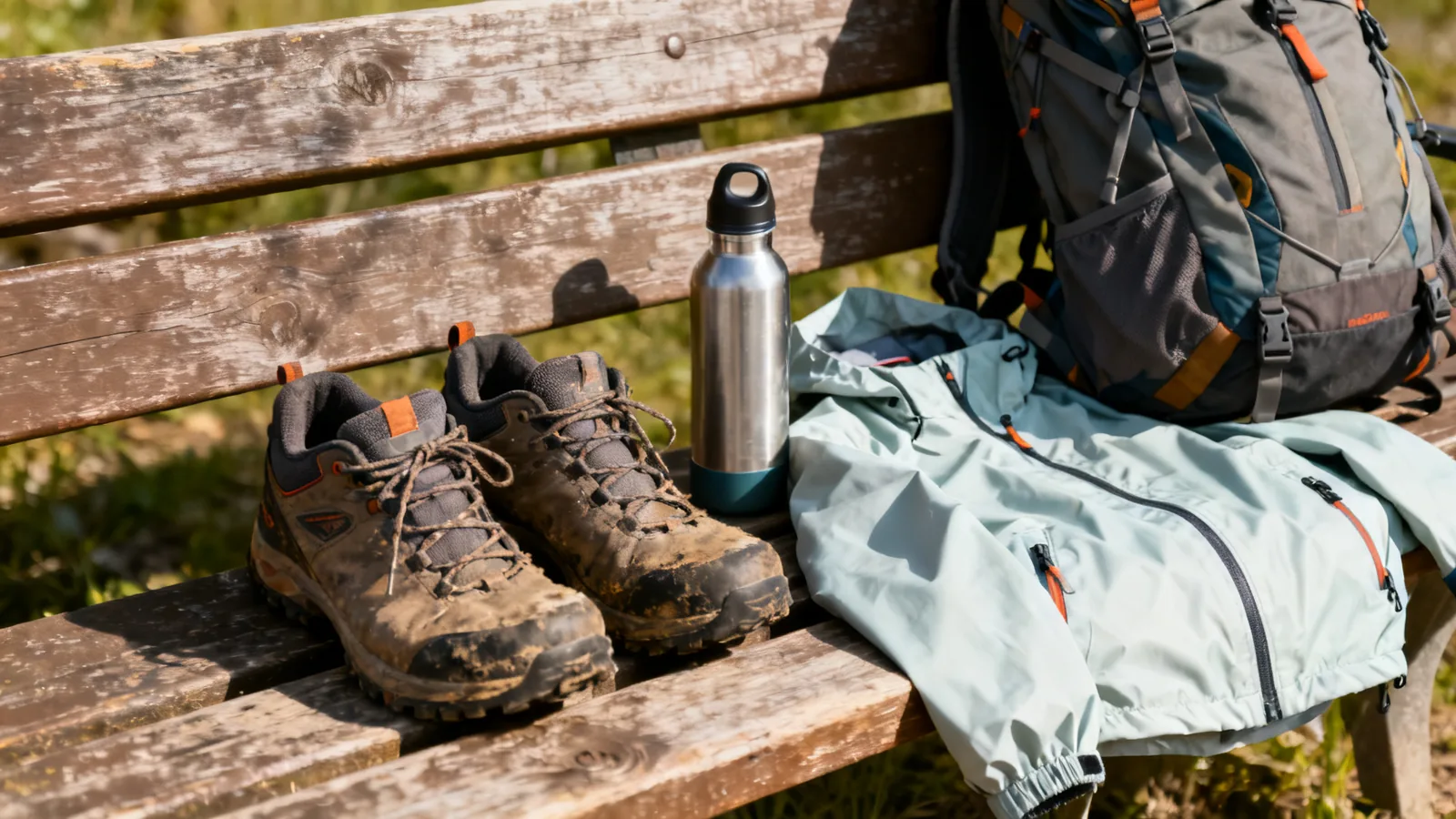
Footwear should suit the surface described by the guide and stay secure on the foot. Check the soles and fit before the day, including whether socks rub when walking downhill. Carry the layer you expect to need at a stop, not just while moving. If an item is offered for rent, ask whether it is reserved and what happens if none is available.
Do not make an essential part of the plan depend on an assumed rental.
Horse services sometimes appear in visitor accounts. We have not confirmed a current service or price, or a change of route here. A horse is not a guaranteed rescue plan or proof that all paths are accessible. Ask the actual seller about any proposed use before relying on it. Your group still needs a workable plan for the parts that would be on foot.
Pack for the walk and the wait
Keep the walking bag small enough to manage on the route. Leave unrelated luggage with an agreed custodian or include it explicitly in your transport booking. Do not assume the walking guide can store a suitcase. Ask the driver whether any vehicle storage is available and under what terms. Carry the items you need during the walk with you.
- Take water and food that suit your own needs and the agreed trip length.
- Bring a rain layer and an extra layer for a cool or windy stop.
- Choose secure footwear and socks already comfortable for walking.
- Protect a phone and essential papers from rain.
- Carry any personal items you normally need away from the place you stay.
- For a low-light trip plan, confirm a working light for each walker.
This is a preparation list, not a claim that gear makes every route suitable. Check the day's requirements with your guide. A clouded viewpoint can still be cold while the uphill section felt warm. Keep a dry layer where you can reach it without emptying the bag. Pack out food wrappers and other waste rather than leaving them beside a rest stop.
Do not count on buying supplies on the path. A service mentioned in an old account may not be there on your date. Confirm any meal included in a package and whether it happens before or after the walk. Carry the food you have agreed to bring. People with dietary needs should discuss the exact meal rather than accepting a generic “lunch included” label.
Weather and light change the plan
The Pacaya weather guide separates a forecast from a seasonal summary. A forecast for a city or another place named Pacaya may not describe the walking area. Check location as well as the date and issue time. Ask the guide how rain or wind, as well as cloud would affect the chosen route. A forecast is one input; it does not confirm access.
An early departure does not guarantee a clear view. A late departure does not guarantee a colourful sunset. Make the light part of the trip plan rather than the entire reason to go. The sunrise guide covers what an early walk needs. The sunset guide focuses on the return after daylight fades.
If the schedule includes darkness, ask where the group expects to be at that point. Confirm whether lights are supplied and whether you should bring your own. A phone torch may be awkward when you need your hands free. Check batteries before departure. The transport plan should name the person waiting after the walk, not merely say that a return is included.
Keep a change option that you can actually use. Ask about the difference between a seller cancelling and your party choosing not to go. Obtain the relevant terms before paying. A weather concern may not trigger a refund under the booking's rules. It helps to know those terms while you can still choose a distinct format.
What you might see, and what is not promised
Lava rock is part of Pacaya's landscape, but a lava field is not the same as moving molten rock. The Smithsonian's eruption history does not establish what a visitor can see today. Neither does a dramatic photo on a booking page. Ask what the seller expects on the allowed route, with the source and date of that expectation. Keep your booking decision independent of a guaranteed red glow.
Some trip plans mention roasting marshmallows. This should not imply approaching a hot opening or a fresh flow on your own. Our marshmallow guide explains the distinction between a supervised optional stop and a normal part of every walk. Ask whether the activity is allowed and included on your date. Declining it should not leave you without a walking or return plan.
The main experience can be the volcanic setting and the guided walk. Cloud may hide a distant view. A route change may remove a specific feature. Decide whether the remaining day would still be worthwhile to you. If one image or activity is essential, obtain a clear answer about its uncertainty before making the booking.
Is the hike worth the day in your trip plan?
Pacaya can suit someone who wants a guided volcanic landscape walk without planning an overnight mountain trip. That is a match between an trip plan and an interest, rather than a ranking of Guatemala's volcanoes. It may be a poor fit for a visitor seeking a guaranteed crater edge or a fixed lava display. No seller can turn those expectations into permanent features of the landscape.
Think about the rest of the day as well as the walk. A pickup far from your hotel can make a short outing much longer. A flight arrival followed by a hike leaves little room for a delay or a slow start. Consider a separate travel day if the plan needs several things to go exactly right. Your return plan should be useful even if you turn back early.
For a group, settle the main goal before choosing extras. One person may want a short walk while another wants a long food stop. A combined trip plan can work only if the timing and walking needs agree. Use the Pacaya day-trip planner to lay out the full sequence. Then compare the services rather than just the headline price.
Questions to settle before you leave
Is a summit visit included?
Do not infer that from a tour title. Ask for the named allowed endpoint and the current local instruction. The summit elevation in a science record is not a promise to take you there. If the seller cannot explain the route, choose a clearer description. Confirm any revised plan with the guide on arrival.
Can a child or a slower walker join?
Ask about the specific walk and pace, with a turnaround plan plan. We cannot give a blanket suitability judgment for a child or someone with a health condition. Describe the group's needs before booking. Obtain the seller's answer about what they can support. A shorter advertised duration does not replace that discussion.
What if the route changes after booking?
Ask which alternatives the seller can offer and how the price or terms for cancelling apply. A changed endpoint may still give a worthwhile day, but that depends on your reason for going. Read the terms before accepting an alternative. Keep the return meeting clear even if the walking plan becomes shorter.
Continue with these guides
- pacaya volcano: Independent Place and Visiting Guide
- Pacaya Volcano Tour: Compare Departures and Inclusions
Verdict: choose a Pacaya volcano hike with clear boundaries
Choose a Pacaya volcano hike whose start, allowed endpoint and return you understand. Confirm the guide and entry as separate parts of the total. Keep weather and visibility flexible, and match the pace to your whole party. A clear short route is more useful than an impressive promise with no named endpoint.