
Marshmallows on a Pacaya volcano visit
Treat marshmallow roasting as a conditional guided stop. Check the actual provider, permission, food inclusions and the alternative if it cannot happen.
Last reviewed October 2026
Contents13
- What the Pacaya volcano marshmallows activity means
- Volcanic heat does not mean a live lava display
- Confirm the actual Pacaya volcano marshmallows offer
- Keep guide and entry, plus transport separate
- Food ingredients and individual needs
- Supplies: confirm them rather than guessing
- Pace and time at the stop
- Weather and route changes
- Photos and realistic expectations
- Children and people who do not take part
- Compare it with other food or leisure plans
- Keep the confirmation you receive
- Verdict: make Pacaya volcano marshmallows an optional part
Some guides advertise Pacaya volcano marshmallows as an optional stop. It is not a fixed part of every hike. Confirm that the activity is allowed and included on your date. Roasting with volcanic heat is not the same as standing beside molten lava. Do not approach hot ground or openings on your own to reproduce a photo.
In brief: choose the walk first, then check the optional food stop. Ask who supplies it, what is included and what happens if it cannot take place. A seller's description does not establish current park permission, and an old image does not show today's conditions.
What the Pacaya volcano marshmallows activity means
The phrase usually means a guided food stop. Visitors are offered marshmallows to toast with volcanic heat. The exact place and plan depend on the actual trip plan. It should not be read as a promise that every route reaches a suitable spot. Ask the seller to describe what it is selling in ordinary terms.
For a named first-party example, OX Expeditions' Pacaya day trip lists marshmallows among its inclusions and describes a guided roasting stop. We checked the page in October 2026. This supports the fact that the operator advertises that activity. It does not confirm places for your date or grant permission to use a specific location.
The activity is only one part of a walking day. You still need the route and guide, plus the return arranged. An appealing food photo says nothing about the pace of the walk before or after it. Decide whether the whole outing fits your group before choosing it for one stop.
We have not confirmed a current permission from the park authority for a specific roasting location here. Do not interpret that gap as permission to find your own place. Ask the responsible seller to explain the current plan. Follow the instructions given for the actual visitor route.
Volcanic heat does not mean a live lava display
The Smithsonian Pacaya profile describes a complex volcano with a history of lava flows and explosive activity. It gives a science record, rather than a visitor-activity schedule. A history of lava does not show what can be seen on a chosen walk today. Nor does it establish that a specific patch of ground is suitable for food preparation.
Distinguish the terms in an advert. A lava field can refer to rock formed by an earlier flow. A hot spot describes heat at a location, without proving that visitors will see molten rock. An orange glow in an old photo may belong to another date or viewpoint. Ask the seller to separate the expected walk from the image used to promote it.
Do not use touch or smell, or the appearance of the surface to decide where to stand or roast food. This guide provides no method for testing hot ground. The appropriate question is what the current allowed activity is and who supervises it. If that cannot be explained, choose the hike without that extra.
A guide's instructions should describe where the group waits and what each person is asked to do. Do not step away to look for more heat or a clearer photo. An optional stop should not require improvising a route. Keep the agreed walking boundaries intact.
Confirm the actual Pacaya volcano marshmallows offer
A package may include the food, mention it as a possibility or show it only in a photo. Those are distinct levels of commitment. Read the written inclusions for the exact product you plan to book. Ask whether there is a separate charge or any item you are expected to bring.
The OX example is useful because its page names the item rather than leaving it only in an image. It still needs a date-specific booking check. Another seller with a similar title may use another seller or route. Match the seller and product, with the starting base before assuming the same inclusions.
| Evidence to request | Why it matters |
|---|---|
| Written activity description | Establishes what is being offered beyond a photo |
| Seller responsible for the stop | Names who should answer your questions |
| Current allowed plan | Keeps the activity within the visitor route |
| Food and gear inclusions | Separates supplied items from things you must bring |
| Alternative if unavailable | Explains how the rest of the day continues |
Scroll for more →
This is a request checklist, not an availability table. We do not list a roasting point as currently open without a suitable confirmation. The absence of a live offer here does not mean every seller has stopped. It means you should obtain the current answer for your booking.
Keep guide and entry, plus transport separate
Marshmallows included in a tour do not prove that park entry is included. In the OX listing, entry is shown as excluded from the day-trip price. Read the current terms of your chosen product. Check which payments remain due before arriving at the entrance.
The guide who leads the walk may have a distinct role from the driver or seller handling your payment. Ask who supervises the food stop and who makes a change if it cannot happen. A clear handover matters when several sellers contribute to a day. Keep the return plan with the person responsible for transport.
Ask whether the walk is shared or private and how the stop fits its schedule. A shared group may have a set period before continuing. A private booking can still be limited by the allowed route and staff availability. The word private is not a promise that every optional stop will be possible.
The main hiking guide covers the walk's preparation and route questions. Settle those first. Food is an extra part of an outing, rather than a substitute for a route that your party can manage. Everyone still needs a clear way to complete the descent and return.
Food ingredients and individual needs
Ask what product is supplied if ingredients matter to your group. A generic description of marshmallows does not name the ingredients of the actual packet. Check the package or request a clear product answer from the seller. Do not assume that a familiar-looking item meets a dietary requirement.
Tell the seller about any food needs before booking, while it can explain what it can supply. Ask whether bringing your own item is allowed. A substitution should also fit the current activity instructions. Do not assume that another food can be prepared in the same way because it looks similar.
If someone prefers not to eat, ask where they wait during the stop. They should still understand how the group continues and where to meet. A choice not to participate need not become a separate unsupported walking plan. Keep all members of the party within the guide's plan.
This page does not assess whether a specific preparation method meets your personal food needs. The seller must explain the actual service, and you can choose whether it suits you. A dramatic setting does not answer an ingredient question. Obtain the ordinary food details as well as the excursion description.
Supplies: confirm them rather than guessing
Check whether the booking supplies skewers or other items used during the stop. Ask whether anything is shared and what you should do with it afterwards. You do not need to buy gear based on an old visitor account. The current seller should explain what its own activity requires.
Keep any food you are asked to bring contained during the walk. Pack the items so they do not interfere with the rest of your bag. If you choose not to bring food, say so rather than assuming spare supplies will be available. A limited inclusion may have been planned for the booked group size.
Do not collect sticks, remove rocks or alter an opening to copy something shown online. This guide gives no instructions for setting up a roasting spot. Use only the activity the responsible guide is allowed to supervise. If it is not available, continue with the agreed alternative.
Ask about waste before starting. Keep wrappers and unused food with your belongings until you can dispose of them appropriately. A small food stop can still leave packaging behind. Avoid treating the landscape as a place to discard the remains of the activity.
Pace and time at the stop
Ask how much of the day is walking and how much is spent at the main stop. An trip plan may include a meal or exploration alongside the marshmallows. The headline duration may cover the entire road trip. Do not read it as the time you will be standing at one feature.
Find out whether the group returns along the same route. An optional stop can affect the walking total if it requires a allowed detour. Ask whether the group can skip it and still remain together. A person who wants a shorter walk needs that answer before departure.
Consider the descent when planning the stop. A slow return still needs enough time and a guide plan. Food or photos should not create a rushed finish. Ask how the seller adapts the schedule if the group walks more slowly than expected.
Do not schedule a separate fixed connection directly after an estimated return. The drive back remains part of the day even after the activity ends. A delay on the walk or road can affect it. Choose an onward plan with its own suitable margin.
Weather and route changes
The weather guide explains how to check the correct place and valid forecast period. A broad seasonal label does not confirm the conditions for your date. Ask the guide how weather could alter the allowed walk or the food stop. Keep that answer separate from the booking's terms for cancelling.
An activity can be omitted while the rest of the hike continues. Ask what that means for the price and whether another stop is offered. A seller may treat a shortened trip plan differently from a full cancellation. You should know the distinction before deciding that the food experience is essential.
If the access plan changes on arrival, ask for the new plan before starting. Do not search for the old location independently. The reason for a change may not be visible from the path. The revised return should remain clear even if the visit becomes shorter.
Choose an outing you would still consider worthwhile without this stop. That may be the volcanic landscape, the guided explanation or time with your group. If none of those interests you, the uncertainty may make the format a poor match. It is better to recognise that while comparing options.
Photos and realistic expectations
Look for a date and a description when assessing an image. A photo can document a real past activity without showing a current one. A close crop can hide how a group reached the place or where it was allowed to stand. Do not use the camera angle as an access instruction.
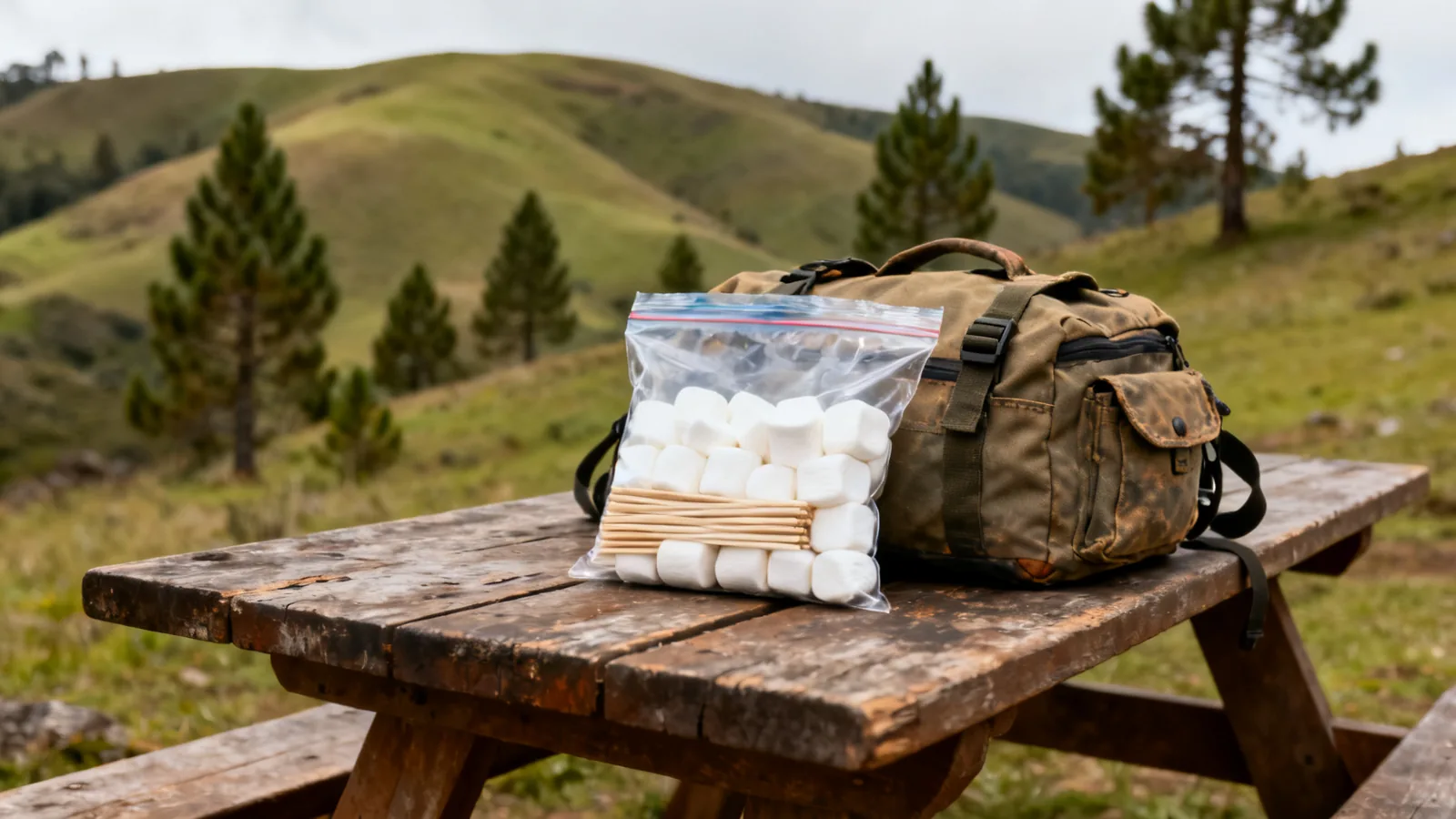
The image on this page is a generated generic preparation scene. It shows food and gear, rather than claiming to document a seller or a Pacaya roasting point. The caption makes that distinction visible. Actual location and taking part need confirmation from the current service.
A seller may use a red-lava image to promote the stop. Ask which feature the trip is expected to show. Do not assume the food is prepared beside the moving flow. The photo and the written trip plan may describe distinct aspects of Pacaya. Request a clear account of the activity on your date.
During a allowed stop, keep photography within the guide's instructions. A better angle is not a reason to leave the group or move towards heat. Ask whether another person can take a picture from where you are allowed to stand. Accept that the available image may look distinct from the promotion.
Children and people who do not take part
Describe your party to the seller before booking. A family-friendly label does not answer how children are supervised during a food stop. Ask who handles the gear and where other participants wait. Keep those answers specific to the service being offered.
Do not assume an adult can supervise the activity while also managing every other part of a child's visit. Discuss the practical plan with the guide. If someone stays back, confirm that they remain within the group's allowed plan. The stop should not create an unexplained split in the party.
Anyone who declines food still needs the walk and rest before the return explained. Agree on where to wait and when the group moves on. Avoid treating not taking part as permission to explore elsewhere. The same route boundaries apply to the whole party.
This guide does not give a blanket suitability judgment for a child or a person with a health condition. Ask about the actual walking and activity demands. Seek personal advice where your circumstances require it. A short food stop does not remove the demands of reaching and leaving it.
Compare it with other food or leisure plans
Roasting marshmallows is not the same product as a named pizza experience. The food seller, meal size and plan may differ. Do not assume one is included because the other appears in a tour description. Ask which activity the seller is actually confirming.
A thermal stop is another separate addition. It needs its own establishment and transfer plan. A day advertised with several extras can leave less time for each one than a photo suggests. Compare the complete schedule rather than adding attractive features in your head.
If the walk is your priority, a straightforward guided trip plan may be the clearest fit. If food is essential, obtain a current description that meets that need. There is no need to rank one format as best for everyone. Choose the service whose confirmed parts match your reason for going.
For broader context, use the Pacaya overview. It explains why the volcanic setting matters beyond a single activity. Keeping that setting in mind can help you decide whether the day remains worthwhile if an optional stop changes. The landscape is not a fixed restaurant service.
Keep the confirmation you receive
Save the product description and the seller's answer for your date. Note the starting base and the actual service name. A screenshot of a general search result is weaker than the terms of the booking itself. Keep any later changes with the original confirmation.
If the seller says the activity is included but conditional, ask which part is conditional. It may be access or location, or the activity itself. The alternative should be explained in enough detail for you to decide. Do not silently turn a possibility into a guarantee in your own trip plan.
Before leaving the place you stay, check for a message about the day. If there is a change, clarify what happens to pickup and return as well as the stop. A missing food stop should not leave transport unresolved. Each service still needs a named plan.
A sweet snack is not the same as a meal
Read the food words in the inclusion list closely. The OX page names a snack as well as marshmallows. Do not turn that wording into a promise of a full lunch without asking. A meal shown in another image may belong to another version of the trip. Ask what food is served and when.
This matters when the day starts before breakfast or ends after your usual meal time. Plan your own food around the actual service, rather than the appeal of a photo. Ask what you are expected to bring. Keep any personal food within the seller's current instructions. A clear answer avoids arriving with everyone expecting someone else to supply the meal.
For a group, share the exact description with each participant. Someone who saw only the marshmallow image may have understood a food-focused outing. Another person may be expecting an ordinary landscape walk. Agree on the main purpose before adding the stop. It is easier to choose a suitable format when the whole party has the same written description.
Continue with these guides
Verdict: make Pacaya volcano marshmallows an optional part
Treat Pacaya volcano marshmallows as a conditional guided activity whose details need checking. Confirm permission and supplies, along with the alternative before paying. Choose the wider walk for reasons that do not depend on one photo. Never look for your own hot spot to replace an unavailable service.