
Pacaya last eruption and documented activity
Read the 2021 catalogue record alongside dated historical reports. Current monitoring remains unconfirmed here; check official bulletins and access notices.
Last reviewed October 2026
Current status unconfirmed
Current Pacaya activity is unconfirmed here
A current actual Pacaya bulletin was not retrieved. The dated eruption catalogue below is historical, and does not confirm current access.
- Scope
- Monitoring and visitor access
- Checked
Contents9
- Pacaya last eruption in the catalogue
- Current bulletin checks and their limits
- Eruption, gas and unrest are distinct terms
- The past 2010 record
- The past 2021 record
- Activity reports do not grant access
- How to read a newer report you find
- Source and correction note
- Verdict: keep the Pacaya last eruption answer dated
The Pacaya last eruption field in the Smithsonian record says 2021. This guide has not confirmed current activity. We checked the record on 15 October 2026. We also checked the official bulletin pages.
A recorded year is a past reference, not proof that Pacaya is quiet today or that visitors may enter. Read the latest actual bulletin before a visit. Check current access rules as well.
In brief: keep three dates separate: when an event happened, when a report was issued and when you read it. A dated record may still be old. It is not always a live status report. Missing details do not mean no activity.
Pacaya last eruption in the catalogue
The Smithsonian Global Volcanism Program's Pacaya profile shows 2021 in its last-known-eruption field. Its latest displayed bulletin is for December 2021. The summary says lava-flow activity ended in mid-May. It gives 13 August as the last reported ash explosion that year. These are statements about the past period covered by the report.
The latest weekly report shown covers 18–24 August 2021. A report period is not an eruption end date. It can report what was seen after an eruption ended. Do not replace one date with the other without reading what each field means.
We do not call the volcano inactive based on that field. The same volcano can show many kinds of signs. The current question needs a current source. A past database provides context, not a substitute for that check.
Current bulletin checks and their limits
The INSIVUMEH daily volcanic bulletin page is an official starting point. We could read the page. We could not retrieve a current Pacaya bulletin from it.
The special-bulletin route needs a dated document too. We did not infer a state from its title. A page heading alone does not establish the current state.
The official CONRED bulletin collection provides another route for notices. A list of reports is not an access notice. Look for the named place, issue date and period of effect in the notice you find. We have not confirmed a current opening or closure from that collection here.
The source-check date is 15 October 2026. No current bulletin issue date or current event date is supplied because the actual document was not retrieved. That absence is stated rather than filled with the date of this article. The past dates below remain past.
| Past source item | Report period or date | What the date tells you |
|---|---|---|
| GVP last-known-eruption field | 2021 | Catalogue reference for the latest recorded eruption |
| GVP latest displayed weekly report | 18–24 August 2021 | Period covered by that weekly report |
| GVP latest displayed bulletin | December 2021 | Bulletin publication period |
Scroll for more →
Source: GVP Pacaya profile, checked 15 October 2026. No row in this table is a current access confirmation. Do not read its dates as a timetable for tours. The current-status notice above records the separate evidence gap.
Eruption, gas and unrest are distinct terms
An eruption report can describe lava, ash or other erupted material. Gas release is another sign. It does not tell you the full state of the volcano on its own.
Unrest is a broader term. It covers changes that need to be assessed. Read the monitoring source's own assessment instead of assigning a label from one visible sign.
The USGS explanation of volcanic gas describes gas release before, during and after eruptions. That general science helps explain why a visible plume is not a complete eruption diagnosis. It is not a current assessment of Pacaya. Use a Pacaya-specific bulletin for the local observation.
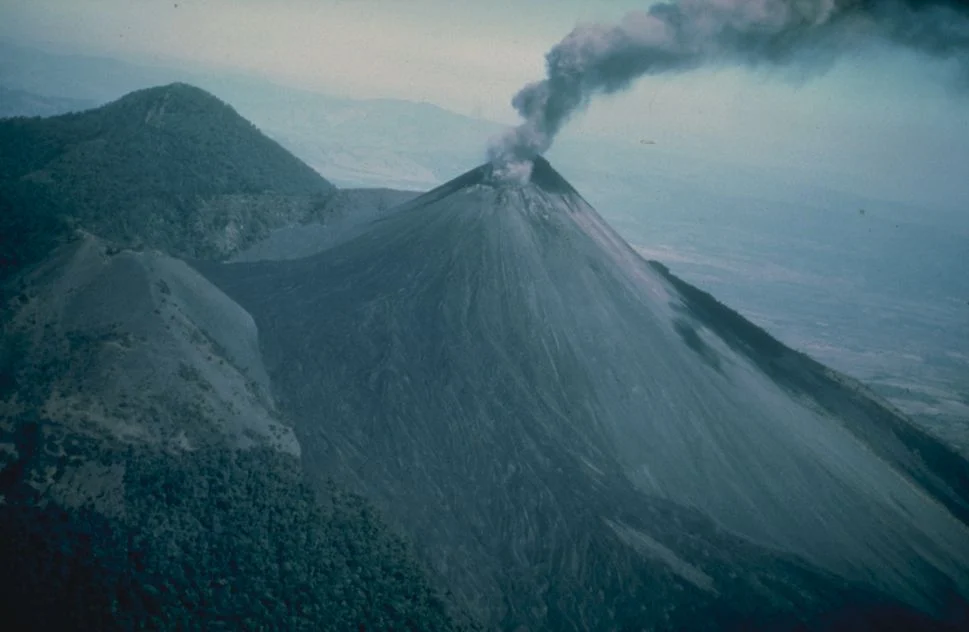
Likewise, an old lava field does not prove lava is flowing now. A photo can record material from an earlier event. A colour or travel description is not a tool for monitoring. The lava guide explains those terms. It keeps past rock separate from current movement.
The past 2010 record
The GVP archive documents ash-producing explosions and lava flows at Pacaya in 2010. Read that section as an account of that year's activity. A picture or description from the event can help explain the volcano's history. It should not be used as a current warning without a present source.
The archive includes observations with their own dates and reporting context. Avoid taking a measurement from one episode and attaching it to another. A lava-flow length in a past report is not the length of a visitor route. The past event and today's permitted walk answer distinct questions.
This page does not reproduce impact totals that have not been checked against the underlying official record. It also does not turn an old emergency response into current park policy. Past evidence should retain the event and source it belongs to. That makes it more useful than a dramatic undated summary.
The past 2021 record
The December 2021 GVP bulletin looks back at that year. It covers lava flows and explosions, then describes later changes. Its summary gives separate dates for the end of lava-flow activity and the last reported ash explosion. This is why a single “last eruption” year cannot explain every observation. The full record contains several stages.
NASA's Pacaya image article provides another dated view of that period. It was published in April 2021 and uses satellite imagery captured earlier. Its image dates matter more than a later website update when identifying what the image shows. A current page timestamp cannot make an old lava image current.
If you compare these sources, keep observation date and issue date in separate notes. A report can be issued after the event it describes. An image can be captured before the article that explains it. None of those dates is automatically the date of the next visitor's experience.
Activity reports do not grant access
A science bulletin reports observations and may contain advice. Park rules govern the actual visit. You need to know which source is answering which question. Do not infer that a route is open simply because a report does not describe an eruption in progress.
Nor should a supplier's acceptance of a booking be treated as an authority-issued access notice. Ask how it confirms the route for your date and what happens if instructions change. The hiking guide explains the route and return questions. An old summit description does not override current instructions.
Keep the plan flexible enough to accept a changed endpoint. Confirm the return even if the walk is shortened. If you book transport and guiding on their own, both need to know about the change. The past volcano record cannot make that handover for you.
How to read a newer report you find
Check the source identity first. Then inspect the issue date printed in the actual document. Read the Pacaya section.
Note the period observed. It can differ from the issue date. Look for any separate instruction relevant to visitors.
Avoid treating a search snippet as the complete report. It may show an old document or only one sentence. Follow the source and confirm what the bulletin actually says. If you cannot read the document, leave that gap open. Do not infer its contents from the title.
When sharing a notice, keep its date and source link. A cropped image can lose the period it applies to. A translated summary should retain the same limits as the original. Do not add an access promise that the source did not make.
Source and correction note
Source check, 15 October 2026: we read the past GVP record. We could not retrieve a current Pacaya bulletin through the official pages used here. This page therefore makes no live activity claim. A correction should name the actual document and the affected date or fact. Use our contact page to point out a source issue.
Continue with these guides
Verdict: keep the Pacaya last eruption answer dated
The Pacaya last eruption catalogue answer is 2021 in the checked Smithsonian profile. Check current monitoring and access on their own. Do not turn a missing report into a claim of quiet conditions. The Pacaya overview explains how the past record fits the wider place.